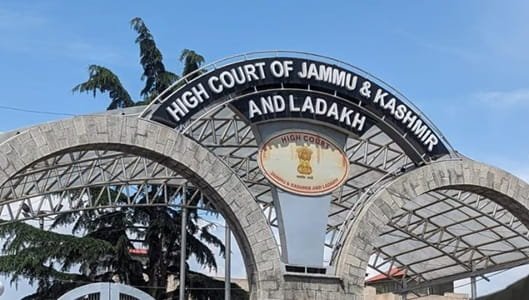
The High Court of Jammu & Kashmir and Ladakh is the highest judicial authority for the Union Territories of Jammu & Kashmir and Ladakh. The court handles civil, criminal, constitutional, and administrative matters across both Union Territories. It is one of the most historically important courts in India and is known for its unique dual-seat system functioning from Jammu during winter and Srinagar during summer.
Originally established in 1928 during the rule of Maharaja Hari Singh, the High Court has gone through several constitutional and administrative changes over the decades. After the reorganization of Jammu & Kashmir in 2019, the court officially became the common High Court for the Union Territories of Jammu & Kashmir and Ladakh.
| Particulars | Details |
| Established | 26 March 1928 |
| Jurisdiction | Jammu & Kashmir and Ladakh |
| Type | Common High Court |
| Summer Seat | Srinagar |
| Winter Seat | Jammu |
| Founder | Maharaja Hari Singh |
| Main Functions | Civil, Criminal, Constitutional Cases |
| Official Language | English |
| Current Authority | Constitution of India |
| Official Website | jkhighcourt.nic.in |
History of High Court of Jammu & Kashmir and Ladakh
The history of the High Court dates back to the princely state of Jammu and Kashmir under Dogra rule. Before the establishment of the High Court, the Maharaja himself acted as the final authority in judicial administration. Later, appellate powers were exercised by judicial councils and judicial ministers appointed by the ruler.
In 1927, a new constitutional system was introduced in Jammu and Kashmir. Following this, Maharaja Hari Singh established the High Court of Judicature through Order No. 1 dated 26 March 1928. For the first time, the state received a formal High Court consisting of a Chief Justice and two judges.
Lala Kanwar Sain became the first Chief Justice of the court, while Lala Bodh Raj Sawhney and Khan Sahib Aga Syed Hussain served as puisne judges.
The court initially functioned from the historic Mubarak Mandi complex in Jammu. Later, the High Court infrastructure expanded and eventually shifted to the present High Court complex at Janipura in Jammu during the 1990s.
After the Constitution of Jammu and Kashmir came into effect in 1957, the High Court became an independent constitutional judicial body for the state. The court also gained powers to issue writs for enforcement of fundamental rights.
A major constitutional change occurred in 2019 when the Jammu and Kashmir Reorganisation Act divided the former state into two Union Territories:
- Jammu & Kashmir
- Ladakh
After this reorganization, the High Court continued as the common High Court for both Union Territories and was later officially renamed the “High Court of Jammu & Kashmir and Ladakh.”
Jurisdiction of High Court of Jammu & Kashmir and Ladakh
The High Court exercises wide powers under the Constitution of India.
Original Jurisdiction
Certain matters can be directly filed before the High Court without approaching lower courts first.
These include:
- Writ petitions
- Public Interest Litigations (PILs)
- Constitutional disputes
- Government service matters
- Election-related cases
Appellate Jurisdiction
The court hears appeals from subordinate courts across Jammu & Kashmir and Ladakh.
It handles:
- Civil appeals
- Criminal appeals
- Sessions court matters
- Family court appeals
- Tribunal appeals
Writ Jurisdiction
Under Article 226 of the Constitution, the High Court can issue writs for protection of legal and fundamental rights.
Citizens can approach the court against:
- Illegal government actions
- Administrative irregularities
- Constitutional violations
- Public authority decisions
Supervisory Jurisdiction
The High Court supervises all subordinate courts functioning within Jammu & Kashmir and Ladakh and ensures proper judicial administration.
Structure of High Court of Jammu & Kashmir and Ladakh
The court functions under the leadership of the Chief Justice along with permanent and additional judges appointed by the President of India.
According to official information, the sanctioned strength of the court is 17 judges including permanent and additional judges.
Dual Seat System
One of the most unique features of the court is its dual-seat system.
The court functions from:
- Srinagar during summer
- Jammu during winter
This practice follows the traditional “Darbar Move” system historically followed in Jammu and Kashmir administration.
Types of Cases Handled
The court handles:
- Civil disputes
- Criminal matters
- Constitutional cases
- Property disputes
- Tax matters
- Service matters
- Public Interest Litigations
Digital Facilities
The High Court provides several modern digital services including:
- E-filing system
- Online case status
- Virtual hearings
- Digital cause lists
- Video conferencing facilities
Subordinate Courts Under the High Court
Several district courts function under the supervision of the High Court.
Major district courts include:
- Srinagar District Court
- Jammu District Court
- Leh District Court
- Anantnag District Court
- Baramulla District Court
- Kupwara District Court
- Kathua District Court
- Pulwama District Court
These courts handle local civil, criminal, family, and property disputes across both Union Territories.
Court Buildings and Infrastructure
The High Court operates from two separate locations:
Jammu Wing
The Jammu Wing functions from the Janipura High Court Complex and mainly operates during winter months.
Srinagar Wing
The Srinagar Wing functions during summer and serves the Kashmir region. The administrative machinery of the High Court shifts between Jammu and Srinagar every year.
The court campuses include:
- Courtrooms
- Judges’ chambers
- Registry sections
- Digital filing counters
- Advocate halls
- Judicial libraries
Importance of High Court of Jammu & Kashmir and Ladakh
The High Court plays a major role in maintaining constitutional governance and judicial administration in one of India’s most sensitive and strategically important regions.
The court regularly handles important matters related to:
- Constitutional rights
- Land disputes
- Security laws
- Public administration
- Service matters
- Human rights
- Religious property disputes
In recent years, the court has delivered several important judgments related to waqf properties, public administration, employee rights, and governance issues.
The High Court is also known for handling matters involving regional constitutional and administrative complexities.
Address of High Court of Jammu & Kashmir and Ladakh
Jammu Wing Address
High Court of Jammu & Kashmir and Ladakh
Janipura, Jammu
Jammu & Kashmir – 180007
Srinagar Wing Address
High Court of Jammu & Kashmir and Ladakh
Srinagar, Jammu & Kashmir – 190001
Official Website
https://jkhighcourt.nic.in
FAQs
Q1. When was the High Court of Jammu & Kashmir established?
A: The High Court was established on 26 March 1928 by Maharaja Hari Singh.
Q2. Which areas come under this High Court?
A: The court has jurisdiction over the Union Territories of Jammu & Kashmir and Ladakh.
Q3. Why does the High Court function from two places?
A: The court follows the traditional dual-seat system, functioning from Srinagar during summer and Jammu during winter.
Q4. Who was the first Chief Justice of the court?
A: Lala Kanwar Sain was the first Chief Justice.
Q5. What types of cases are handled by the court?
A: The court handles civil, criminal, constitutional, tax, service, and public interest litigation matters.
Q6. Does the High Court provide online services?
A: Yes, the court provides e-filing, online case status, virtual hearings, and digital cause lists.
Q7. What changed after the 2019 reorganization?
A: After the Jammu and Kashmir Reorganisation Act, the court became the common High Court for the Union Territories of Jammu & Kashmir and Ladakh.