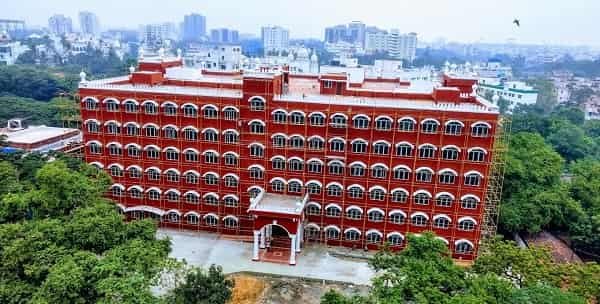
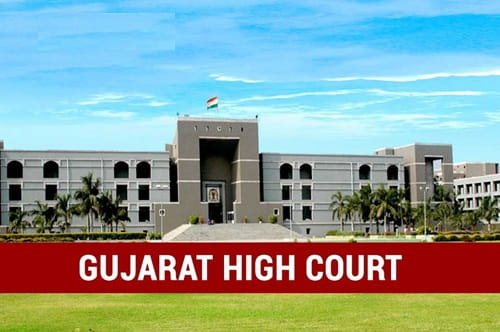
The Gujarat High Court is the highest judicial authority in the state of Gujarat. Located in Ahmedabad, the court handles civil, criminal, constitutional, administrative, and commercial matters across the state. It plays a major role in protecting constitutional rights, supervising subordinate courts, and ensuring proper judicial administration.
Established on 1 May 1960 after the bifurcation of the former Bombay State into Gujarat and Maharashtra, the Gujarat High Court is known for its modern judicial infrastructure, constitutional importance, and landmark judgments. The court also became one of the first High Courts in India to introduce live streaming of proceedings.
| Particulars | Details |
| Established | 1 May 1960 |
| Location | Ahmedabad, Gujarat |
| Jurisdiction | State of Gujarat |
| Type | High Court |
| Main Functions | Civil, Criminal, Constitutional Cases |
| Official Language | English |
| Current Authority | Constitution of India |
| Sanctioned Judge Strength | 52 Judges |
| Current Chief Justice | Justice Sunita Agarwal |
| Official Website | gujarathighcourt.nic.in |
History of Gujarat High Court
The Gujarat High Court was established on 1 May 1960 under the Bombay Reorganisation Act, 1960 after the old Bombay State was divided into the states of Gujarat and Maharashtra.
Initially, the High Court started functioning from a building near Akashvani in Navrangpura, Ahmedabad. Later, due to increasing judicial work and infrastructure requirements, the court shifted to its modern complex located at Sola on the Sarkhej-Gandhinagar Highway on 16 January 1999.
Justice Sunderlal Trikamlal Desai became the first Chief Justice of the Gujarat High Court. Along with him, several respected judges including Justice K. T. Desai and Justice J. M. Shelat were among the first judges of the court.
Over the years, the Gujarat High Court has delivered important judgments related to:
- Constitutional rights
- Industrial disputes
- Environmental protection
- Urban development
- Election matters
- Commercial law
- Public administration
The court has also contributed several judges to the Supreme Court of India, including Justice J. B. Pardiwala and Justice Bela Trivedi.
Jurisdiction of Gujarat High Court
The Gujarat High Court exercises wide powers under the Constitution of India.
Original Jurisdiction
Certain matters can be filed directly before the High Court without approaching lower courts first.
These include:
- Writ petitions
- Public Interest Litigations (PILs)
- Constitutional disputes
- High-value commercial matters
- Service matters involving government employees
Appellate Jurisdiction
The court hears appeals from district and subordinate courts throughout Gujarat.
It handles:
- Civil appeals
- Criminal appeals
- Sessions court matters
- Family court appeals
- Tribunal appeals
Writ Jurisdiction
Under Article 226 of the Constitution, the Gujarat High Court can issue writs for protection of legal and fundamental rights.
Citizens can approach the court against:
- Illegal government actions
- Administrative irregularities
- Constitutional violations
- Public authority decisions
Supervisory Jurisdiction
Under Article 227, the High Court supervises all subordinate courts functioning within Gujarat.
The court also has the power to punish for contempt of court and functions as a court of record.
Structure of Gujarat High Court
The Gujarat High Court functions under the leadership of the Chief Justice along with permanent and additional judges appointed by the President of India.
According to official information, the sanctioned strength of the court is 52 judges.
Chief Justice and Judges
The current Chief Justice of the Gujarat High Court is Justice Sunita Agarwal.
Judges are appointed by the President of India after consultation with the Chief Justice of India and the Governor of Gujarat.
Bench System
The court operates through:
- Single Judge Benches
- Division Benches
- Special Benches
- Constitution-related Benches
Different benches hear matters depending on the category and importance of cases.
Types of Cases Handled
The Gujarat High Court handles:
- Civil disputes
- Criminal matters
- Commercial disputes
- Tax matters
- Property disputes
- Constitutional cases
- Public Interest Litigations
Digital Facilities
The Gujarat High Court is considered technologically advanced and has introduced several modern judicial systems including:
- E-filing facilities
- Virtual hearings
- Online case status
- Digital cause lists
- Video conferencing systems
- Live streaming of proceedings
The court became one of the pioneering High Courts in India to implement live streaming of court proceedings.
Subordinate Courts Under Gujarat High Court
Several district courts function under the supervision of the Gujarat High Court.
Major district courts include:
- Ahmedabad District Court
- Surat District Court
- Rajkot District Court
- Vadodara District Court
- Bhavnagar District Court
- Jamnagar District Court
- Gandhinagar District Court
- Junagadh District Court
These courts handle local civil, criminal, family, and property matters throughout Gujarat.
Court Building and Infrastructure
The present Gujarat High Court complex is located at Sola, Ahmedabad on the Sarkhej-Gandhinagar Highway.
The court complex includes:
- Modern courtrooms
- Judges’ chambers
- Digital filing sections
- Registry offices
- Advocate halls
- Conference facilities
The infrastructure was developed to handle increasing judicial workload and modern court management systems.
Importance of Gujarat High Court
The Gujarat High Court is one of the most influential courts in western India. It plays a major role in handling industrial, commercial, and constitutional disputes because Gujarat is one of India’s leading industrial states.
The court has delivered important judgments related to:
- Business regulations
- Environmental protection
- Urban planning
- Governance matters
- Human rights
- Industrial law
The High Court is also recognized for promoting technology-driven judicial reforms and digital court systems.
Address of Gujarat High Court
Official Address
- High Court of Gujarat, Sola, Sarkhej-Gandhinagar Highway, Ahmedabad, Gujarat – 380060
FAQs
Q1. When was the Gujarat High Court established?
The Gujarat High Court was established on 1 May 1960 after the bifurcation of Bombay State.
Q2. Where is the Gujarat High Court located?
It is located at Sola in Ahmedabad, Gujarat.
Q3. Who was the first Chief Justice of Gujarat High Court?
Justice Sunderlal Trikamlal Desai was the first Chief Justice of the Gujarat High Court.
Q4. What is the sanctioned strength of judges in Gujarat High Court?
The sanctioned strength of the court is 52 judges.
Q5. Does the Gujarat High Court provide online services?
Yes, it provides e-filing, online case status, virtual hearings, digital cause lists, and live streaming facilities.
Q6. What types of cases are handled by the Gujarat High Court?
The court handles civil, criminal, constitutional, commercial, tax, and public interest litigation matters.
Q7. Why is the Gujarat High Court important?
The court plays a major role in protecting constitutional rights, resolving commercial disputes, and supervising subordinate courts across Gujarat.