The Telangana High Court, popularly known as the Hyderabad High Court, is the highest judicial authority in the state of Telangana. Located on the banks of the Musi River in Hyderabad, the court handles civil, criminal, constitutional, and administrative matters across the state. The court is widely known for its historic Indo-Saracenic architecture, constitutional importance, and landmark judgments.
The present High Court for the State of Telangana officially came into existence on 1 January 2019 after the bifurcation of the former Andhra Pradesh High Court. However, the judicial history of the institution dates back to 1919 during the rule of the Nizam of Hyderabad.
Quick Overview of Telangana High Court
| Particulars | Details |
| Established | 1 January 2019 (present Telangana High Court) |
| Original Judicial Institution | 1919 |
| Location | Hyderabad, Telangana |
| Jurisdiction | State of Telangana |
| Type | High Court |
| Main Functions | Civil, Criminal, Constitutional Cases |
| Official Language | English |
| Historic Founder | Nizam Mir Osman Ali Khan |
| Court Building Style | Indo-Saracenic Architecture |
| Official Website | tshc.gov.in |
History of Telangana High Court
The history of the Hyderabad High Court goes back to the princely state of Hyderabad under the Nizam’s rule. The court was originally established in 1919 as the High Court of Hyderabad for the Hyderabad Deccan State by the 7th Nizam, Mir Osman Ali Khan. Initially, the court started with six judges.
Before shifting to its present location, the High Court functioned from multiple buildings across Hyderabad including:
- Pathergatti
- Residence of Nawab Asman Jah
- Public Gardens
- Residence of Nawab Salar Jung Bahadur
- Saifabad
Later, construction of the present High Court building began in 1915 and was completed in 1919. The building officially opened in 1920.
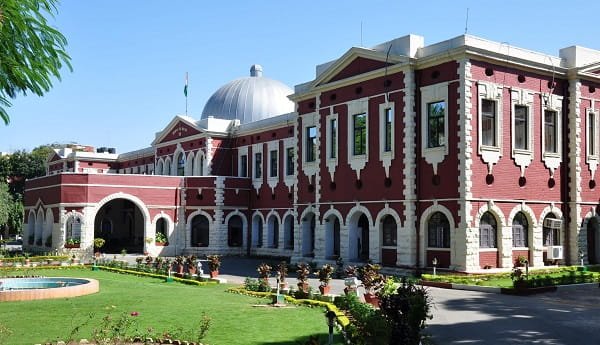
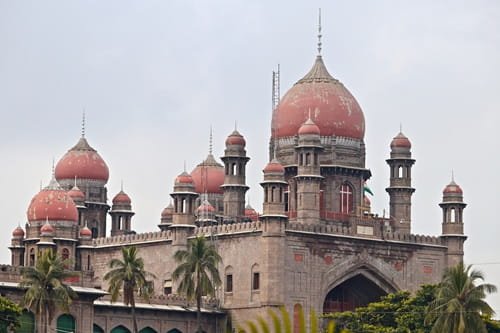
The court building was constructed using red and white stone and designed in Indo-Saracenic style. The design was prepared by architect Shankar Lal of Jaipur, while engineer Mehar Ali Fazil supervised the execution work.
After the States Reorganisation Act of 1956, the Hyderabad State and Andhra State merged to form Andhra Pradesh. The court was then renamed the High Court of Andhra Pradesh. The number of judges increased because of the expanded jurisdiction.
In 2014, Andhra Pradesh was bifurcated into:
- Telangana
- Andhra Pradesh
Initially, both states continued using the common High Court at Hyderabad. Finally, on 1 January 2019, separate High Courts were created for Telangana and Andhra Pradesh. The Hyderabad court officially became the High Court for the State of Telangana.
Today, the Telangana High Court remains one of the most historically significant courts in India.
Jurisdiction of Telangana High Court
The Telangana High Court exercises wide powers under the Constitution of India.
Original Jurisdiction
Certain matters can be directly filed before the High Court without approaching lower courts first.
These include:
- Writ petitions
- Public Interest Litigations (PILs)
- Constitutional disputes
- Government service matters
- Election-related disputes
Appellate Jurisdiction
The court hears appeals from district and subordinate courts throughout Telangana.
It handles:
- Civil appeals
- Criminal appeals
- Sessions court matters
- Family court appeals
- Tribunal appeals
Writ Jurisdiction
Under Article 226 of the Constitution, the High Court can issue writs for protection of legal and fundamental rights.
Citizens approach the court against:
- Illegal government actions
- Administrative irregularities
- Constitutional violations
- Public authority decisions
Supervisory Jurisdiction
The High Court supervises all subordinate courts functioning within Telangana and ensures judicial discipline and proper administration.
Structure of Telangana High Court
The Telangana High Court functions under the leadership of the Chief Justice along with permanent and additional judges appointed by the President of India.
Bench System
The court operates through:
- Single Judge Benches
- Division Benches
- Special Benches
- Constitution-related Benches
Different benches hear matters depending on legal complexity and subject matter.
Types of Cases Handled
The court handles:
- Civil disputes
- Criminal cases
- Constitutional matters
- Tax disputes
- Land disputes
- Service matters
- Public Interest Litigations
Administrative Departments
The court has several administrative departments handling:
- Case filing
- Judicial records
- Registry operations
- Digital systems
- Cause lists
- Court management
Digital Facilities
The Telangana High Court provides several modern digital services including:
- E-filing system
- Online case status
- Virtual hearings
- Digital cause lists
- Video conferencing facilities
Court Building and Architecture
The Telangana High Court building is one of Hyderabad’s most famous heritage structures. Located near the Musi River, the building reflects Indo-Saracenic architecture with domes, arches, and red-white stone construction.
Important features include:
- Large central dome
- Mughal-inspired arches
- Red and white granite structure
- Historic courtroom halls
- Heritage judicial chambers
The building was constructed on the site of former Qutb Shahi palaces known as Hina Mahal and Nadi Mahal.
The structure has been recognized as an important heritage site and was included in heritage conservation lists.
Subordinate Courts Under Telangana High Court
Several district courts function under the supervision of the Telangana High Court.
Major district courts include:
- Hyderabad District Court
- Warangal District Court
- Nizamabad District Court
- Karimnagar District Court
- Khammam District Court
- Adilabad District Court
- Mahabubnagar District Court
- Rangareddy District Court
These courts handle local civil, criminal, family, and property matters across Telangana.
Importance of Telangana High Court
The Telangana High Court plays a major role in maintaining constitutional governance and judicial administration in the state.
The court regularly handles important matters related to:
- Urban development
- Land disputes
- Environmental protection
- Civic administration
- Constitutional rights
- Government administration
In recent years, the court has passed important orders related to demolitions, illegal constructions, and public administration in Hyderabad.
The court is also known for improving judicial infrastructure and case disposal systems. According to recent reports, the court achieved a very high case disposal rate despite staffing limitations.
Address of Telangana High Court
Official Address
High Court for the State of Telangana
Near City College
Madina, Charminar
Hyderabad, Telangana – 500066
FAQs
Q1. When was the Telangana High Court established?
The present Telangana High Court was officially established on 1 January 2019.
Q2. What was the earlier name of the Telangana High Court?
Earlier, it was known as the High Court of Hyderabad and later the High Court of Andhra Pradesh.
Q3. Where is the Telangana High Court located?
It is located near the Musi River in Hyderabad, Telangana.
Q4. Who founded the original Hyderabad High Court?
The original High Court was founded by the 7th Nizam, Mir Osman Ali Khan, in 1919.
Q5. What types of cases are handled by the Telangana High Court?
The court handles civil, criminal, constitutional, tax, service, and public interest litigation matters.
Q6. Does the Telangana High Court provide online services?
Yes, it provides e-filing, online case status, virtual hearings, and digital cause lists.
Q7. Why is the Telangana High Court building famous?
The building is famous for its Indo-Saracenic architecture, historical importance, and heritage status.