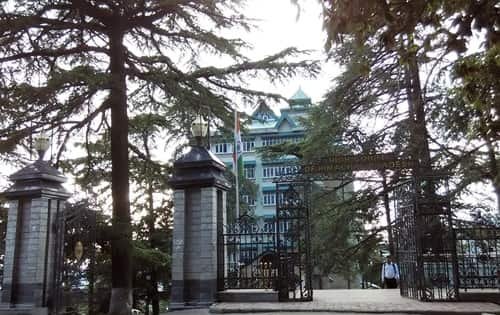
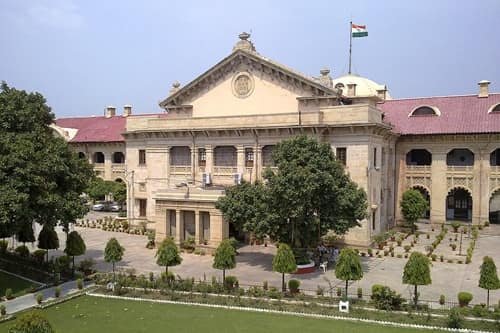
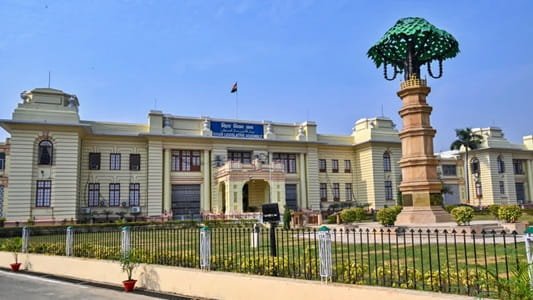
The Supreme Court of India is the highest judicial authority in the country and the apex court under the Constitution of India. It acts as the final court of appeal and protects the constitutional rights of citizens. The Supreme Court also ensures that the Constitution is followed by the Union Government, State Governments, and all lower courts.
Established on 28 January 1950, the Supreme Court replaced the Federal Court of India and became the guardian of the Indian Constitution. Located on Tilak Marg in New Delhi, the court has delivered several landmark judgments related to democracy, fundamental rights, elections, privacy, and constitutional law.
Today, the Supreme Court is considered one of the most powerful constitutional courts in the world because of its wide judicial powers and authority.
Quick Overview of Supreme Court of India
| Particulars | Details |
| Established | 28 January 1950 |
| Location | Tilak Marg, New Delhi |
| Jurisdiction | Entire India |
| Type | Apex Constitutional Court |
| Highest Authority | Constitution of India |
| Maximum Strength | 34 Judges including Chief Justice |
| Official Language | English |
| Main Functions | Constitutional, Civil, Criminal, Advisory Matters |
| First Chief Justice | Justice H. J. Kania |
| Official Website | sci.gov.in |
History of Supreme Court of India
The history of the Supreme Court of India is closely connected with India’s constitutional development. During British rule, the highest appellate authority for Indian matters was the Judicial Committee of the Privy Council in London. Later, the Federal Court of India was established in 1937 under the Government of India Act, 1935.
After India became independent and adopted the Constitution on 26 January 1950, the Supreme Court of India was established on 28 January 1950. It replaced both the Federal Court and the Privy Council as the highest judicial authority in the country.
The inaugural sitting of the Supreme Court took place in the Chamber of Princes inside the Parliament building. Justice Harilal Jekisundas Kania became the first Chief Justice of India. Later, in 1958, the court shifted to its present building on Tilak Marg in New Delhi.
The original Constitution provided for one Chief Justice and seven other judges. Over time, the number of judges increased because of the growing number of cases in the country. Today, the sanctioned strength of the Supreme Court is 34 judges, including the Chief Justice of India.
Over the decades, the court has delivered historic judgments such as:
- Kesavananda Bharati Case
- Maneka Gandhi Case
- Right to Privacy Judgment
- Ayodhya Verdict
- NJAC Judgment
These decisions shaped constitutional law and democratic governance in India.
Jurisdiction of Supreme Court of India
The Supreme Court has wide powers under the Constitution of India.
Original Jurisdiction
Under Article 131, the Supreme Court directly hears disputes between:
- Central Government and States
- Two or more States
- Centre and State together against another State
It also protects fundamental rights under Article 32, allowing citizens to directly approach the Supreme Court.
Appellate Jurisdiction
The Supreme Court hears appeals against judgments of High Courts and tribunals across India.
These include:
- Civil appeals
- Criminal appeals
- Constitutional appeals
- Special Leave Petitions (SLPs)
The court acts as the final court of appeal in India.
Advisory Jurisdiction
Under Article 143, the President of India can seek the opinion of the Supreme Court on important legal or constitutional questions.
Writ Jurisdiction
The Supreme Court can issue writs such as:
- Habeas Corpus
- Mandamus
- Certiorari
- Prohibition
- Quo Warranto
These writs help protect fundamental rights of citizens.
Judicial Review
The court has the power of judicial review, meaning it can declare laws unconstitutional if they violate the basic structure of the Constitution. This power makes the Supreme Court the guardian of the Constitution.
Structure of Supreme Court of India
The Supreme Court functions under the Chief Justice of India (CJI) along with other judges appointed by the President of India.
Composition
Currently, the court can have a maximum strength of 34 judges including:
- 1 Chief Justice of India
- 33 Other Judges
Judges retire at the age of 65 years.
Bench System
The judges generally sit in smaller benches of two or three judges. However, important constitutional matters are heard by larger Constitution Benches of five or more judges.
Administrative Structure
The Supreme Court Registry manages:
- Case filing
- Judicial records
- Cause lists
- Digital services
- Administrative work
The court also uses modern technology such as:
- E-filing system
- Virtual hearings
- Live streaming in selected cases
- Online case status portals
Supreme Court Building
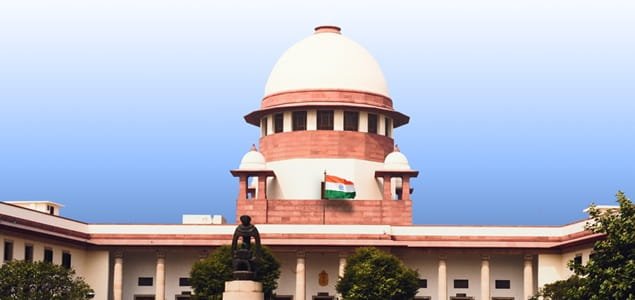
The present Supreme Court building was inaugurated in 1958. Its design represents the scales of justice. Over the years, additional wings and extension buildings were added because of increasing workload.
The complex now includes:
- Main Court Building
- East Wing
- West Wing
- Additional Building Complex
- Judges’ Library
- Supreme Court Museum
The building also contains statues of Mahatma Gandhi and Dr. B. R. Ambedkar.
Address of Supreme Court of India
Official Address
Supreme Court of India
Tilak Marg
New Delhi – 110001
Contact Numbers
- 011-23116400
- 011-23116401
Official Website
- https://www.sci.gov.in/
Importance of Supreme Court of India
The Supreme Court is one of the strongest pillars of Indian democracy. It ensures that laws and government actions remain within constitutional limits. Its judgments are binding on all courts in India under Article 141 of the Constitution.
The court has played a major role in:
- Protecting fundamental rights
- Maintaining judicial independence
- Resolving Centre-State disputes
- Expanding human rights
- Strengthening democracy
Because of its constitutional authority, the Supreme Court is often called the “Guardian of the Constitution.”
FAQs
Q1. When was the Supreme Court of India established?
The Supreme Court of India was established on 28 January 1950.
Q2. Where is the Supreme Court located?
It is located on Tilak Marg in New Delhi.
Q3. Who was the first Chief Justice of India?
Justice H. J. Kania was the first Chief Justice of India.
Q4. What is the maximum strength of Supreme Court judges?
The sanctioned strength is 34 judges including the Chief Justice of India.
Q5. What types of cases are heard in the Supreme Court?
The court hears constitutional, civil, criminal, appellate, advisory, and writ matters.
Q6. Can citizens directly approach the Supreme Court?
Yes. Citizens can directly approach the Supreme Court under Article 32 for protection of fundamental rights.
Q7. What is judicial review?
Judicial review is the power of the Supreme Court to declare laws unconstitutional if they violate the Constitution.